Who Determines the Sex of the Baby?
Written by Sukie Chinese | Last Updated: November 18, 2026 | Last Reviewed: November 18, 2026
Who determines the sex of the baby? The sperm does. Every egg carries an X chromosome, and each sperm carries either an X or a Y. If the sperm that reaches the egg carries an X, the baby is XX, a girl; if it carries a Y, the baby is XY, a boy. It is settled at fertilization, weeks before anyone knows they are pregnant.
That one paragraph is the whole answer, and it quietly explains why every chart, calendar and kitchen remedy for predicting or picking a baby's sex runs into the same wall. The rest of this page explains the biology in plain words, shows it in a diagram, and looks at what new research on large families adds.
From Two Cells to XX or XY
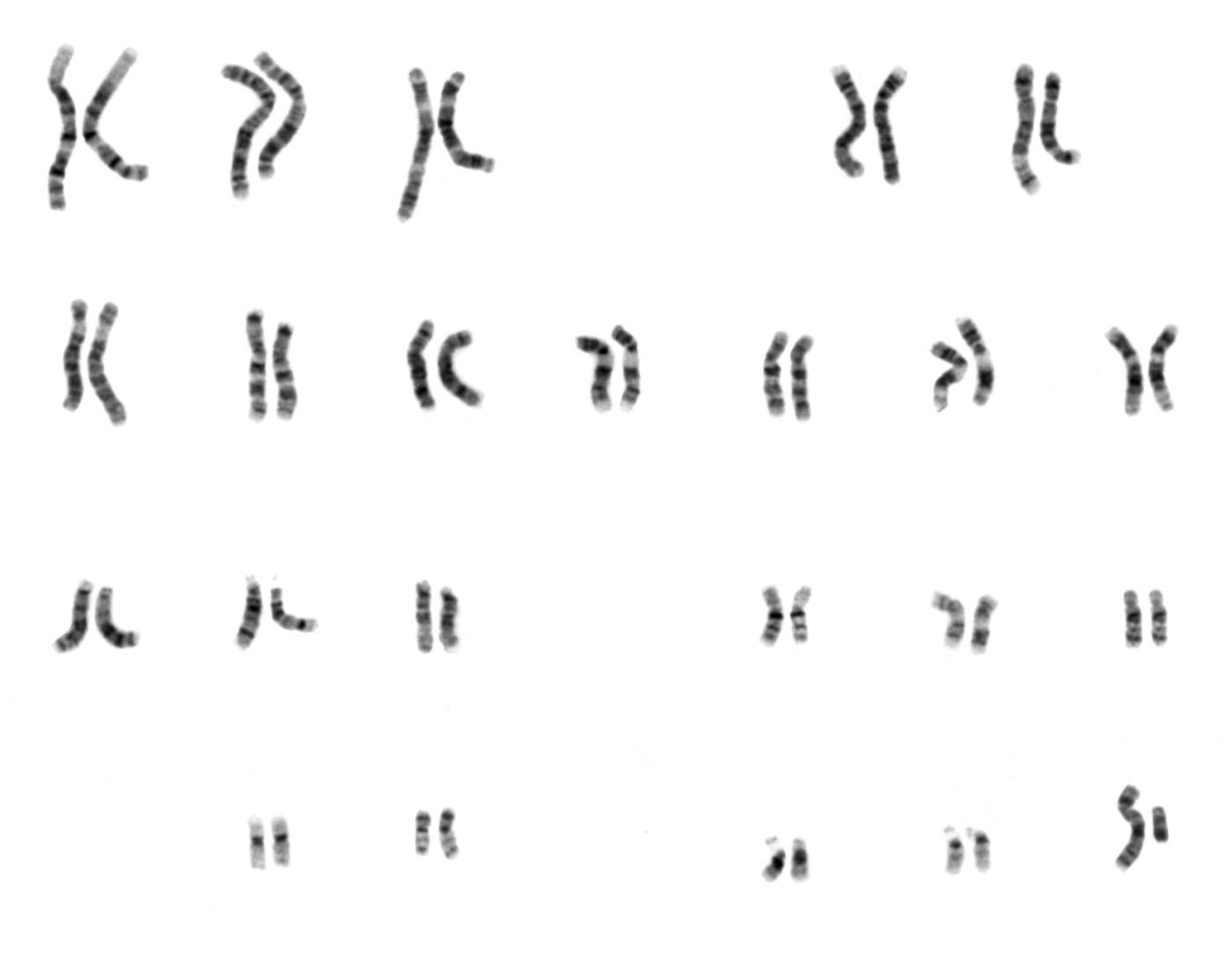
Human cells usually carry their genetic instructions in pairs of chromosomes. One of those pairs, the sex chromosomes, comes in two kinds, X and Y. According to the National Human Genome Research Institute, females have two X chromosomes in their cells and males have one X and one Y, and the two in combination determine the sex of an individual.
Follow that through conception step by step:
- The egg. A mother's sex chromosomes are both X, so whichever one ends up in an egg, the egg carries an X. There is no Y for her to pass on.
- The sperm. A father's sex chromosomes are one X and one Y, so each sperm carries one or the other.
- Fertilization. One sperm joins the egg. Its X or Y pairs with the egg's X, and the new cell is either XX or XY. Every cell of the baby grows from that first one.
- Development. On the Y chromosome sits a gene called SRY. MedlinePlus Genetics describes it as the gene responsible for the development of a fetus into a male.
So, Mother or Father?
Strictly, it is the father's sperm that carries the deciding chromosome, which is why the question “which parent determines the sex of the baby” has a one-word answer. But it would be wrong to read that as the father choosing anything. Which sperm reaches the egg is not something either parent decides.
The point is worth making plainly because you may still hear the opposite idea: that a mother who has “only girls” or “only boys” is somehow responsible. The biology does not support that. Her egg contributes the same X either way.
Why Charts and Menus Can't Change It
Once you see that the decision is made by one sperm at one moment, the popular methods sort themselves into two groups.
Methods that predict after conception, like the Chinese gender calendar, the heart-rate rule or bump shape, are guessing at something already fixed. They could only work if they somehow detected the XX or XY pair, and none of them has a way to. When the Chinese calendar was applied to 2,840,755 Swedish births, its predictions matched the baby's sex no better than chance (Villamor et al., 2010).
Is It Really a Coin Toss? The Family Question
For a single pregnancy, the practical answer is yes, close to a coin toss. But anyone who knows a family with four boys has wondered whether the coin is always fair. A 2025 study in Science Advances (Wang et al.) looked at exactly that.
| Who | 58,007 US women with two or more single live births |
|---|---|
| Pregnancies | 146,064, between 1956 and 2015 |
| Pattern | Fitted a model where each family has its own probability of a boy or girl, like a weighted coin, rather than one shared 50/50 coin |
| Linked factor | Older maternal age at first birth was associated with higher odds of children of only one sex |
This does not contradict the X-or-Y biology. Each pregnancy is still decided by the sperm at fertilization; the study's pattern simply fits each family having its own odds, and the abstract does not say why. It is an association across thousands of families, not a dial anyone can turn, and the study does not tell any one couple what their odds are. We go through it in more detail on our second baby gender prediction page.
What About Twins?
Twins are a neat test of the X-or-Y idea, because the two kinds of twins start in different ways. The NHS explains that about one third of twins are identical and two thirds are non-identical, and that identical twins are always the same sex.
That follows straight from the biology on this page. Identical twins come from a single fertilized egg that splits, so both babies carry the same XX or XY pair that was set at fertilization. Non-identical twins come from two separate eggs, each fertilized by its own sperm, so each baby gets its own X or Y. They can be two girls, two boys, or one of each, exactly like two siblings born years apart.
It also explains a common surprise with charts. Folk calendars give one answer per pregnancy, so a boy-and-girl pair of twins is always half wrong on any chart. We look at that in our guide to the Chinese gender calendar and twins.
Explaining It to an Older Sibling
Big brothers and sisters often ask whether they can “choose” a baby sister, or whether Mom eating something special will help. A version of the biology that works for curious school-age children:
“Everybody is built from tiny instructions. Mom's egg always brings an instruction called X. Dad's side brings either an X or a Y. Two X's make a girl, and an X and a Y make a boy. It got decided right at the very start, before anyone even knew the baby was there, and nobody got to pick. Now we just wait and find out.”
It is honest, it takes the pressure off everyone, and it turns the waiting into something the whole family shares. If the child still wants to guess, a folk method makes a good game as long as everyone agrees it is a game.
A Note on the Words
Strictly, what the chromosomes set is the baby's biological sex, and that is the term doctors and the sources on this page use. In everyday speech, and in phrases like “gender reveal” or “gender prediction”, people usually say gender to mean the same thing. We use both on this site because readers search both ways, but when we talk about what a scan or a blood test detects, sex is the accurate word.
When Chromosomes Don't Follow the Textbook
XX and XY describe most people, not everyone. MedlinePlus Genetics lists several conditions involving the sex chromosomes, including people with an extra X or Y and, more rarely, people in whom the SRY gene has moved onto an X chromosome during the formation of sperm. These are medical topics for doctors and genetic counsellors, not something a chart can speak to. If a test result ever raises a question like this, your provider or a genetic counsellor is the right person to talk to.
What This Means for Every Prediction Method
Because the sex is written into the chromosomes, a method can only truly read it in one of two ways: by detecting the chromosomes themselves, or by seeing the anatomy they produce.
- Reading the chromosomes: a cell-free DNA blood test looks at DNA from the placenta in the mother's blood. ACOG says it can be done starting at 10 weeks and screens for problems with the number of sex chromosomes, which is why it can also report the sex.
- Seeing the anatomy: the mid-pregnancy scan, which the NHS usually does between 18 and 21 weeks, when you may be asked if you would like to know.
- Everything else, from the ring test to the lunar calendar, measures something unrelated to X and Y, which is why the tested ones land at chance. Our page on old wives tales gender collects the studies.
Whether to have a test, and which one, is for you and your doctor or midwife to decide. The folk methods are still fun for the weeks of waiting, and knowing the biology makes it easier to enjoy them without taking the result to heart. Our gender prediction methods overview lines them all up.
Short Answers
Which parent determines the sex of the baby?
The sperm decides it. Every egg carries an X chromosome, while each sperm carries either an X or a Y, so the sperm that fertilizes the egg sets the baby’s sex. Nobody chooses which sperm that is.
Can the mother affect the sex of the baby?
Not by anything she eats or does. The mother’s egg always contributes an X. Large family data hints that some families lean one way more than a plain coin toss, but that is a pattern across families, not something a parent controls.
When is the sex of the baby decided?
At fertilization, when the sperm and egg combine. Development along male lines then depends on the SRY gene on the Y chromosome. Everything after fertilization, including the date on a chart, comes too late to change it.
Can anything the mother eats during pregnancy change the baby’s sex?
No. The sex is set at fertilization by whether the sperm carries an X or a Y chromosome, usually before anyone knows a pregnancy has begun, so nothing eaten afterwards can change it.
Why can twins be a boy and a girl?
Non-identical twins grow from two separate eggs, each fertilized by its own sperm, so each baby gets its own X or Y. Identical twins come from one fertilized egg that splits, and the NHS notes they are always the same sex.
More Ways People Guess Boy or Girl
Every method below is checked against the research on our gender prediction methods overview, and the original folk method is the Chinese gender calendar.