Ring Test for Gender: The Pendulum Game, Explained
Written by Sukie Chinese | Last Updated: November 16, 2026 | Last Reviewed: November 16, 2026
The ring test for gender is a pendulum game: a ring hangs on a thread over the pregnant belly or wrist, and the way it swings, in a circle or in a straight line, is read as girl or boy. Nobody has published a test of it, and the swing is explained by tiny movements of the hand holding the thread, an effect described in 1852.
It is also one of the most enjoyable of the old pregnancy games, because it happens in front of everyone and the ring really does seem to move by itself. This guide explains how to do it, the many versions families use, and what is actually going on when the ring starts to circle.
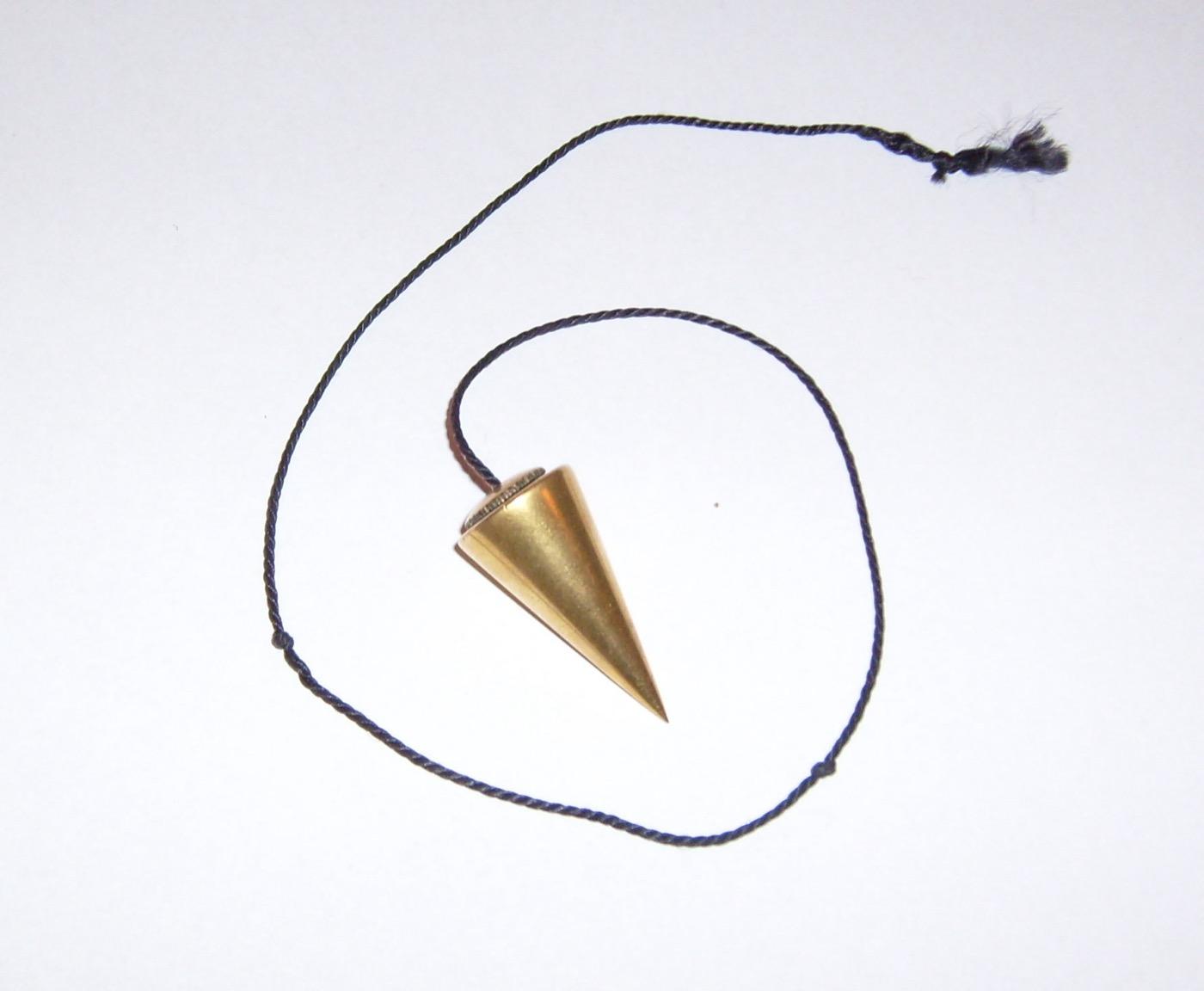
What you need
- A ring, a needle or a small pendant, anything with a little weight
- A thread, a hair or a fine chain about a forearm's length
- Someone to hold it, and a few people to watch
- A pen and paper, if you want to keep score honestly (more on that below)
How to do the ring test, step by step
- Thread the ring and tie the ends so it hangs at the bottom of a loop. Many people use a strand of the pregnant person's own hair; ordinary sewing thread works the same.
- The pregnant person lies on their back, or sits and holds out a hand palm up, depending on the version you are using.
- The holder pinches the thread between finger and thumb and lets the ring hang still, a few centimetres above the belly or the inside of the wrist.
- Everyone waits. Within a few seconds the ring usually starts to move. Do not try to move it; that is the whole game.
- Watch the shape it settles into: a circle, or a straight back-and-forth swing. Read it with whichever meaning your family uses, shown in the diagram below.
Circle or line: reading the swing
The commonest reading is circle for a girl and line for a boy. But ask three families and you may hear two answers, and some read it the other way round with equal confidence. A few add a third outcome: if the ring barely moves, the baby is “keeping it a secret”.
That disagreement is worth noticing. A test that worked would need one fixed meaning; a game that survives by being right half the time can carry either meaning forever, because whichever version a family uses, it is remembered as correct about half the time.
The versions families play
Over the belly
The classic: the ring hangs above the bump while the pregnant person lies down. It is the version people film for social media, and it is the one most families mean by “the ring test”.
Over the wrist
The ring hangs over the inside of the wrist or the palm. Because no bump is needed, it gets played at any age, often by children at sleepovers and by relatives at a wedding table.
The needle and thread
A threaded sewing needle replaces the ring. Some families hold it over the wrist, others lower it slowly into the gap between thumb and forefinger and back out again before watching the swing. The reading is the same: circle or line.
Counting the children
The longest version keeps going. Each time the ring settles into a swing, that is one child, circle or line, and the holder stops it and lets it start again. When the ring finally hangs still, the “count” is finished. In this form the game claims to predict the number and order of all future children, which shows how freely the ring can be asked anything at all.
Why does the ring move by itself?
It does not move by itself; it moves with the hand, in a way the holder does not notice. Psychologists call this the ideomotor effect. The term was coined by William Benjamin Carpenter in 1852 to describe muscle movement that happens without conscious intention, and a hand-held pendulum is the standard demonstration (ideomotor phenomenon).
The mechanics are simple. A ring on a thread is very sensitive: a movement of the fingers far too small to feel is enough to start it swinging, and once it is moving it amplifies whatever rhythm the hand falls into. If the holder half-expects a circle, the fingers drift in tiny circles; if they half-expect a line, they rock. Holders are usually entirely honest when they say they did nothing, because they really did not decide to do anything.
The same effect explains table-turning and talking boards, and Michael Faraday built an apparatus to demonstrate it on table-turning. The Wikipedia summary notes that tests of such devices show that “honest, intelligent people can unconsciously engage in muscular activity that is consistent with their expectations”. A ring over a bump is a small, sweet example of exactly that.
Has anyone tested it?
Not that we can find. On October 26, 2026 we searched PubMed, the U.S. National Library of Medicine's index of medical research, for any study of the ring or pendulum test as a way of predicting a baby's sex, and found none. We reached the same answer for the baking soda test and for skull theory.
Several neighbouring tales have been tested, and none passed. A Johns Hopkins team found that belly shape and morning sickness were not related to the baby's sex (Perry et al., 1999), and the Chinese gender calendar matched chance across 2,840,755 Swedish births (Villamor et al., 2010). We keep the full scorecard on our old wives tales gender page.
There is also a reason no one has bothered. A baby's sex is set at fertilization by the X or Y chromosome in the sperm, and nothing about that is available to a ring hanging in the air above the skin. Without a possible way for the ring to sense anything, a study would only be measuring how the holder's hand behaves.
When the ring won't behave
It will not move at all. A very steady hand, a heavy ring or a short thread can keep it almost still. Families usually take a still ring as “no answer” and try again later, or hand the thread to someone else. Both moves fit the ideomotor explanation: a new hand brings new small movements.
It swings wildly or bumps the belly. The ring is too low or the holder is moving their arm. Raise it so it clears the skin by a few centimetres and rest the holding elbow on a cushion or the edge of the sofa. A ring that touches the body gets pushed around by breathing, which is a different kind of noise.
It starts as a line and turns into a circle. This happens often, because a pendulum that is nudged in two directions at once naturally traces an oval. Most families go with whatever shape it settles into after the first few seconds; some go with the first swing. Decide the rule before you start, not after you have seen the result.
Two people get two answers. That is the most common outcome of all, and the most informative. Each holder's hand makes its own tiny movements, so different holders produce different swings. If the ring were picking up something from the baby, the holder would not matter.
The hair thread keeps breaking. A single hair is weak, which is one reason the needle version became popular. Ordinary cotton or sewing thread does the same job, and the game does not depend on whose hair it is.
A fairer way to play
If you want to enjoy the game and test it at the same time, take the holder's expectations out of it. A version you can run at a baby shower:
- Choose a holder who does not know which family rule (circle = girl or circle = boy) you are using.
- Have the holder close their eyes, so they cannot see the swing building.
- A second person watches and writes down circle or line, before anyone reads a meaning into it.
- Repeat with three different holders and compare.
- Seal the notes until the scan or birth, then score them.
If the ring were reading the baby, three holders with their eyes closed should agree every time. If it is reading the holders, they will disagree about as often as coin tosses do. Either way, the sealed notes make a lovely keepsake once the baby arrives.
Where the ring test fits with the other folk methods
The ring is the most physical of the gender games. The others ask about the body, like cravings, skin and the shape of the bump, or about dates, like the Chinese gender calendar, which reads the mother's lunar age against the lunar month of conception. If you want to compare the ring's answer with the chart, our Chinese gender chart shows every cell, and the Chinese gender reveal calendar page has ideas for turning the guesses into a reveal.
None of these is a test, and none is meant to be. The baby's sex can be learned from medical tests and scans arranged with your doctor or midwife; the ring belongs to the waiting time before that, when the guessing is half the fun.
Ring test FAQ
Does the ring test for gender work?
There is no evidence that it does. We searched PubMed in October 2026 and found no study testing it, and the swing is explained by small, unconscious movements of the hand holding the thread.
Does a circle mean a boy or a girl?
It depends on who taught you. The version we hear most often reads a circle as a girl and a straight line as a boy, but plenty of families use the reverse. There is no original rule to settle it.
Do I have to use a wedding ring?
No. People use a wedding ring, any ring, a needle, a pin or a pendant. The object only needs some weight so that it hangs straight and swings freely.
Can I do the ring test before I am pregnant?
Many families do, as the “how many children will I have” version over the wrist. It is the same game with the same physics, so it predicts children no better than it predicts sex.
Who should hold the ring?
Anyone with a steady hand, but the fairest version is the blind one described above: the holder should not know which answer the family is hoping for, because expectations are what move the hand.
Why did the ring swing differently the second time?
Because your hand, your expectations and how still you were holding all changed. With nothing outside you driving the swing, a second try is a new roll of the dice.
More Ways People Guess Boy or Girl
Every method below is checked against the research on our gender prediction methods overview, and the original folk method is the Chinese gender calendar.