Gender Blood Test: How It Reads Your Baby's Sex
Written by Sukie Chinese | Last Updated: November 10, 2026 | Last Reviewed: November 10, 2026
A gender blood test looks for DNA from the placenta in the pregnant person's blood. If Y-chromosome DNA is found, the baby is read as a boy; if not, as a girl. Clinics offer it as cell-free DNA screening (NIPT) from 10 weeks; at-home kit makers claim 6 weeks.
Three Steps From Arm to Answer
- 1The placenta sheds DNA. The American College of Obstetricians and Gynecologists describes cell-free DNA as the small amount of DNA released from the placenta into the pregnant person's bloodstream. MedlinePlus explains that this placental DNA is what the test reads to screen the fetus's chromosomes, including the X and Y.
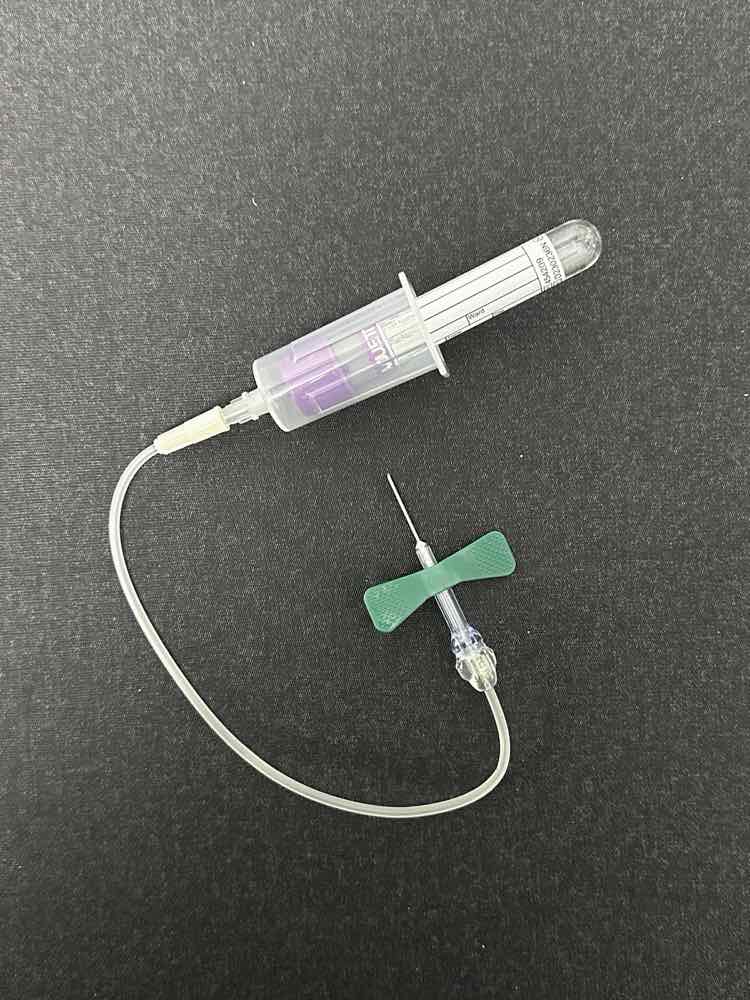
- 2A blood sample is taken. In a clinic this is an ordinary blood draw from the arm. At-home kits ask the parent to collect a small sample and post it to the company's lab; SneakPeek, for example, describes on its website collecting the sample at home and mailing it back. The pregnant person's own DNA is in the sample too, mixed with the placental fragments.
- 3The lab looks for Y. Females typically have two X chromosomes and no Y (NHGRI), so Y-chromosome DNA in her blood is the signal these tests read as a male pregnancy. SneakPeek puts its own rule plainly: if male DNA is detected the baby is a boy, and if not, a girl. Clinical screening reads the sex chromosomes as part of a wider check, described below.
Clinic Screening and Home Kits, Side by Side
The phrase “gender blood test” covers two quite different things. One is a medical screening test that happens to read the sex chromosomes; the other is a consumer product made to answer the boy-or-girl question. The table keeps every claim tied to who made it.
| Cell-free DNA screening (NIPT) | At-home early gender kit | |
|---|---|---|
| Who arranges it | Your doctor, midwife or clinic | The parent, directly from the company |
| Earliest week | From 10 weeks (ACOG) | From 6 weeks (company claim) |
| Main purpose | Screening for Down syndrome, trisomy 13, trisomy 18 and extra or missing X or Y chromosomes (MedlinePlus) | The baby's sex |
| How the sex is read | As part of reading the sex chromosomes | Male DNA detected = boy, none = girl (SneakPeek's description) |
| Results | About 1 week (ACOG) | Sent by the company |
| Where the accuracy figure comes from | ACOG and MedlinePlus describe it as a screening test whose accuracy varies by condition | “Over 99%” on both makers' websites (company claim) |
| If a result is unexpected | A positive screen for a condition is followed by a diagnostic test (ACOG) | Discuss it with your provider |
We name SneakPeek and Peekaboo only because they are the names parents search for; we do not link to their shops. We have no relationship with either company and do not rank tests or quote prices; what a test costs you depends on the seller, your insurance or your health service.
Why the Clock Starts at 10 Weeks in Clinics
Most of the DNA floating in a pregnant person's blood is her own. The share that comes from the placenta is called the fetal fraction, and the U.S. National Library of Medicine explains that it generally has to be above 4 percent, which typically happens around the tenth week. Below that, there may not be enough placental DNA to read reliably.
MedlinePlus lists testing too early among the reasons for a low fetal fraction, along with sampling errors, maternal obesity and abnormalities in the fetus, and says a low fraction can make the test impossible to perform or give a false negative. For a test that decides “boy” by finding Y-chromosome DNA, a sample with too little placental DNA is the obvious way a boy could be missed. That is our reading of the mechanism, not a published error rate, and it is one reason the week matters.
The home-kit makers say their method works earlier, from 6 weeks. We cannot check that claim against an independent study, so we report it as theirs.
How a Result Can Go Wrong
Because the decision rests on finding male DNA, two kinds of error are possible in principle, and the sources describe both sides.
A “boy” that isn't
Male DNA from anywhere other than the pregnancy can end up in a sample collected outside a clinic. SneakPeek itself tells users, to keep the sample free of male DNA contamination, to wash and air-dry their hands and clean the skin with the brush provided. The instruction exists because stray male DNA would read as a boy.
A “girl” that isn't
If the sample holds too little placental DNA, a Y signal that should be there may not be detected. MedlinePlus names testing too early and sampling errors among the causes of a low fetal fraction, which is why clinics wait for the tenth week.
MedlinePlus also notes that because the test reads both placental and maternal DNA, it may detect a genetic condition in the mother rather than the baby, and that, like any screening test, it can give false positives and false negatives. What any of that means for one particular result is a question only the clinician who ordered or reviewed the test can answer.
Words You May See on a Report
Screening reports and kit results use a handful of terms that are easy to misread. Here is what each one means, in the words of the sources we rely on.
- Cell-free DNA (cfDNA)
- Short pieces of DNA floating freely in the blood rather than inside cells. In pregnancy some of it comes from the placenta, which is what the test reads (ACOG).
- Fetal fraction
- The share of the cell-free DNA that comes from the placenta. MedlinePlus says it generally needs to be above 4 percent; a report may say the test could not be completed if it is too low.
- Screening test
- A test that estimates whether the chance of a condition is increased or decreased. MedlinePlus is explicit that NIPT is a screening test and will not give a definitive answer about a genetic condition.
- Diagnostic test
- A test that confirms or rules out a condition, such as amniocentesis or chorionic villus sampling. ACOG says a positive screening result should be followed by one.
- False positive and false negative
- A false positive flags a problem that is not there; a false negative misses one that is. MedlinePlus says both happen with NIPT. In boy-or-girl terms, the parallel is a “boy” from stray male DNA or a “girl” from too little placental DNA.
- Sex chromosomes
- The X and Y chromosomes. Females typically have two X chromosomes and males one X and one Y (NHGRI). Screening checks for extra or missing copies of them, and the same reading shows whether a Y is present.
If a word on your own report is not on this list, or a result is worded in a way that worries you, that is exactly the moment to ask the clinic that sent it. Reports differ between labs, and the person who ordered the test knows how theirs is written.
Before You Decide: Questions to Ask
Whether a blood test is offered to you, and which one, depends on your provider, your health system and your medical history. These questions help turn a general page like this one into an answer that fits you:
- Do you offer cell-free DNA screening, from which week, and what does it screen for?
- Will the sex chromosomes be on the report, and can I ask not to be told the sex?
- What happens if the test cannot give a result because the fetal fraction is low?
- If I use an at-home kit, how would you want me to treat its result?
- What would a positive screening result for a condition mean for the next steps?
Some parents use cell-free DNA screening for its medical purpose and prefer to keep the sex a surprise. MedlinePlus explains that the test estimates risk rather than giving a diagnosis, which is a good reason to talk it through with your provider before the blood is drawn rather than after the report arrives.
What a Gender Blood Test Is Not
It is not a diagnosis. ACOG says a positive cell-free DNA result for a condition should be followed by a diagnostic test with amniocentesis or chorionic villus sampling, both of which examine the baby's chromosomes directly. Those procedures are offered for medical reasons and are outside the scope of this page.
It is not a way to choose a baby's sex either. A baby's sex is set at fertilization by whether the sperm carries an X or a Y chromosome; the test only reads what is already there. In some countries telling parents the sex before birth is restricted by law, as the note near the top of this page explains for India.
And it is very different from the folk methods this site began with. The Chinese gender calendar predicts from the mother's lunar age and the month of conception, and when researchers applied it to millions of Swedish births it did no better than chance; our scientific evidence review has the details. The calendar is a tradition to enjoy; the blood test is medicine. If you are working out which week you will reach the 10-week mark, our early pregnancy gender prediction guide lays out the first-trimester timeline, and old wives tales gender covers the games people play while they wait.
Three Quick Answers
What is the gender blood test called?
In a clinic it is usually cell-free DNA screening, also called NIPT (noninvasive prenatal testing). Its main job is screening for certain chromosome conditions; the sex chromosomes are part of what it reads. At-home “early gender” kits are separate products sold directly to parents.
How early can a gender blood test be done?
ACOG says cell-free DNA screening can be done starting at 10 weeks. The makers of at-home kits say theirs work from 6 weeks; that is their own claim.
Can a gender blood test be wrong?
Yes, any test can be. MedlinePlus explains that too little placental DNA in the sample, for example from testing too early, can make the test fail or give a false result, and one kit maker tells users to avoid male DNA getting into the sample. Ask the clinician who orders or reviews the test how it performs.
More Ways People Guess Boy or Girl
Every method below is checked against the research on our gender prediction methods overview, and the original folk method is the Chinese gender calendar.