Old Wives Tales Gender Quiz: 12 Questions, One Honest Score
Written by Sukie Chinese | Last Updated: October 31, 2026 | Last Reviewed: October 31, 2026
This old wives tales gender quiz asks the twelve questions relatives love to ask, from cravings to the ring on a thread, and adds up which way the folklore leans. It cannot tell you your baby's sex. When you finish, it shows which of your answers came from tales that scientists have tested, and what they found.
12 questions · a folklore game, not a prediction · nothing you enter leaves this page
How the quiz counts your answers
Each question carries one folk vote. Pick “sweet things” and the girl column gets a point; say you are carrying low and the boy column gets one. Answers like “no change” or “haven't tried it” cast no vote, so you can skip anything that does not apply. The twelfth question is the Mayan rule, which needs no opinion at all: it compares your age at conception with the month you conceived, and calls it a girl when both are even or both are odd.
We left the votes unweighted on purpose. A weighted quiz, one that counts the heart rate as worth three cravings, would suggest that some tales are better than others, and the evidence does not support that. Of the tales here that have been studied, none beat chance. The ones that have not been studied have no evidence for them either, so giving them extra weight would be inventing a hierarchy that nobody has measured.
The result box then sorts your answers into two groups: tales with a published test behind them, and tales without one. That second column is the honest part of the quiz, and the reason we built it. Most quizzes online stop at “Team Girl!” This one tells you how much of that score rests on anything at all.
Four questions with a study behind them
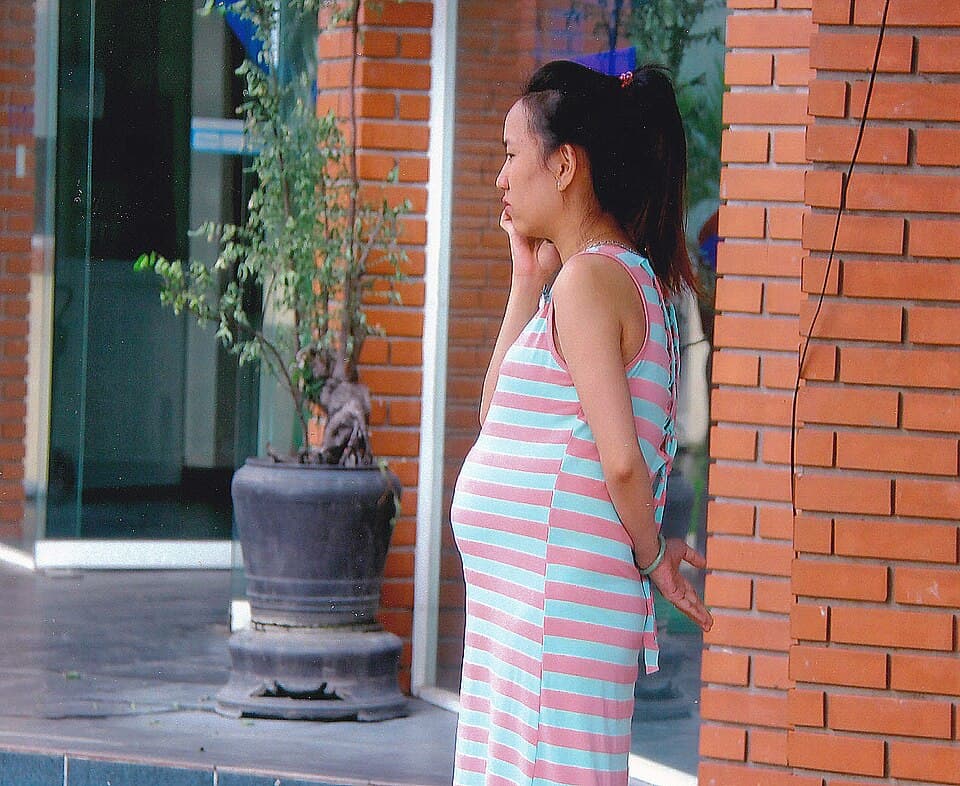
Carrying high or low, and morning sickness. In 1999 a team at Johns Hopkins asked 104 pregnant women who did not know their baby's sex what they expected and why, then checked after the birth. The baby's sex was not systematically related to the shape of the mother's abdomen or to how much sickness she had (Perry, DiPietro and Costigan, Birth, 1999).
There is one wrinkle worth knowing. A separate Swedish research letter reported more girls than boys among babies of mothers who had hyperemesis gravidarum, the severe, medical form of pregnancy sickness (Askling et al., Lancet, 1999). That is a pattern across a large group of women with a specific condition, not a test anyone can apply to their own pregnancy, and it says nothing about ordinary queasiness. The quiz keeps the tale as folklore tells it and flags the Perry result.
Heart rate of 140 or more. A team at Wright State University measured the heart rate in 477 single pregnancies scanned before 14 weeks. Girls averaged 151.7 beats a minute and boys 154.9, both above the folk threshold, and the difference was not significant (McKenna et al., 2006).
The Chinese gender calendar. This is our own site's tradition, and it has had the largest test of any tale: researchers applied the chart to 2,840,755 Swedish births and found it agreed with the baby's sex no better than chance (Villamor et al., 2010). If you have not tried it yet, the Chinese gender calendar calculator works out your lunar age and lunar month for you, and you can bring the answer back to question 11.
Eight questions nobody has tested
Cravings, skin, hair, sleeping side, cold feet, the ring test, a partner's weight gain and the Mayan rule: for each of these we searched PubMed, the U.S. National Library of Medicine's database of medical research, in October 2026 and found no published study testing it as a predictor of the baby's sex. The nearest miss was a 2006 study from the same Johns Hopkins group that looked at heartburn and the newborn's hair, which is a different tale entirely.
“Untested” is not the same as “disproved”, and we are careful not to say otherwise. It means every confident statement you read about these tales, including the specific boy and girl meanings we used in the quiz, is word of mouth. Families tell them differently, too. Some say a left-side sleeper is having a boy and some say the reverse; some read a circling ring as a girl and others as a boy. We used the versions we see most often and say so plainly.
The Mayan rule is a special case. It is pure arithmetic: an even or odd age against an even or odd month. Across any large group of births it will be right roughly half the time, because it splits pregnancies into two groups with no reference to biology at all. Our comparison of the Mayan gender predictor vs the Chinese calendar goes through how the two rules differ.
The other versions you may hear
If your grandmother reads a tale the other way round, she is not wrong; she is using a different version. A few of the swaps we come across most:
- Cravings. Sweet for a girl and salty for a boy is the usual version, but sour is claimed by both sides, and some families add spicy food as a boy sign.
- Sleeping side. Left for a boy is common, and so is the exact opposite, and comfort usually decides the side long before folklore does.
- Skin. “A girl steals your beauty” is the best-known form, but some say a boy causes breakouts because of “male hormones”.
- Ring test. Circle for a girl is our default; plenty of families read a circle as a boy.
Because the meanings vary, you can flip any answer in the quiz to your family's version and the overall lesson stays the same. A rule that can be read either way and still feel right half the time is exactly what a coin toss looks like from the inside.
Why a lopsided score means less than it feels like
Suppose every tale were a fair coin toss. With twelve votes, how often would you get a result that feels decisive? We worked it out from the 4,096 possible ways twelve coins can land:
| Quiz outcome by pure chance | How often | Out of all outcomes |
|---|---|---|
| An exact 6–6 tie | 23% | 924 of 4,096 |
| One side wins 7–5 | 39% | 1,584 of 4,096 |
| One side wins 8–4 or more | 39% | 1,588 of 4,096 |
| One side wins 10–2 or more | 4% | 158 of 4,096 |
So roughly four quiz-takers in ten get a score of 8 to 4 or wider with no signal at all, and about one in twenty-five sees a landslide of 10 to 2. A strong lean is exactly what randomness produces a good share of the time. That is why the quiz shows you the evidence column next to the tally: the size of the score tells you nothing about the baby, only about how the coins fell.
Real answers are not quite coin tosses either, which makes things worse rather than better. Several questions overlap: someone who feels unwell may also sleep badly, have duller skin and crave salty crackers, so one underlying fact can quietly cast three or four votes in the same direction. The folk meanings are not independent of each other, which pushes scores further from a neat tie.
Playing it at a baby shower
The quiz works best as a group game, where the point is the conversation rather than the verdict. A few ways families use it:
- Guests answer for the parent. Everyone fills in the twelve questions from what they have noticed, then compares scores. The spread between guests is usually wider than people expect.
- Seal it before the scan. Copy the result link into the family chat with the date, and open it again after the anatomy scan or birth to see who was right.
- Pair it with the calendar. Run the Chinese gender chart for the parent and for each grandmother's own pregnancies, and see whether the chart would have got the family right.
- Read the evidence column out loud. It turns the game into a small, friendly lesson in how folklore survives: the hits get remembered, the misses do not.
For the full story behind each tale, including the studies, our longer guide to old wives tales gender predictions goes through them one by one.
When to put the quiz down and call someone
Two of the questions touch on symptoms, sickness and the heart rate, and it is worth being clear about where folklore stops. Sickness that is severe is a medical matter, not a clue. The NHS advises calling your midwife, GP or 111 if you are vomiting and cannot keep food or fluids down for 24 hours, have very dark urine or have not peed in more than 8 hours, feel very weak, dizzy or faint when standing, have tummy pain or a high temperature, vomit blood, or have lost weight.
In the same way, a heart rate is something your provider reads for your baby's health, not for boy or girl. If anything about a reading worries you, ask them what it means; do not run it through a folk rule. The quiz is for the fun questions, and those are the only ones it should ever answer.
Questions people ask about the quiz
Is an old wives tales gender quiz accurate?
No. Every tale in the quiz that researchers have tested came out unrelated to the baby’s sex, and the rest have never been tested. Treat the score as a party game.
What does it mean if most of my answers say girl?
Only that the folklore leans girl for you. With twelve coin-flip questions, a lopsided score of 8 to 4 or more happens about 39 times in 100 by luck alone.
Can I share my quiz result?
Yes. After you count the votes, the page address holds your answers, so copying the link lets friends see the same score. Nothing is stored on our side.
More Ways People Guess Boy or Girl
Every method below is checked against the research on our gender prediction methods overview, and the original folk method is the Chinese gender calendar.